In the world of radio, the NOAA POES are considered a great stepping stone into the world of radio and antennas, however, there are so many directions to go from there. One day while browsing youtube, I come across this video by the thought emporium, where in which they set up a wifi parabolic dish and modify it to be able to listen to the NOAA GOES (Geostationary Operational Environmental Satellites), which are like the older brother to the NOAA POES. Instead of being close to earth orbiting and sending down a contiguous scan of the earth, they orbit far away enough from the earth to be considered geo-stationary, where the period of the satellite matches that of earth, such that it appears to stay in the same space when viewed from earth. The benefit of this is that it allows the satellite to constantly view the same section of the earth, making it easy to observe an area over a period of time. Compared to the NOAA POES, which sends down a contiguous scan of the earth, the NOAA GOES takes pictures of the earth in different wavelengths at regular intervals.
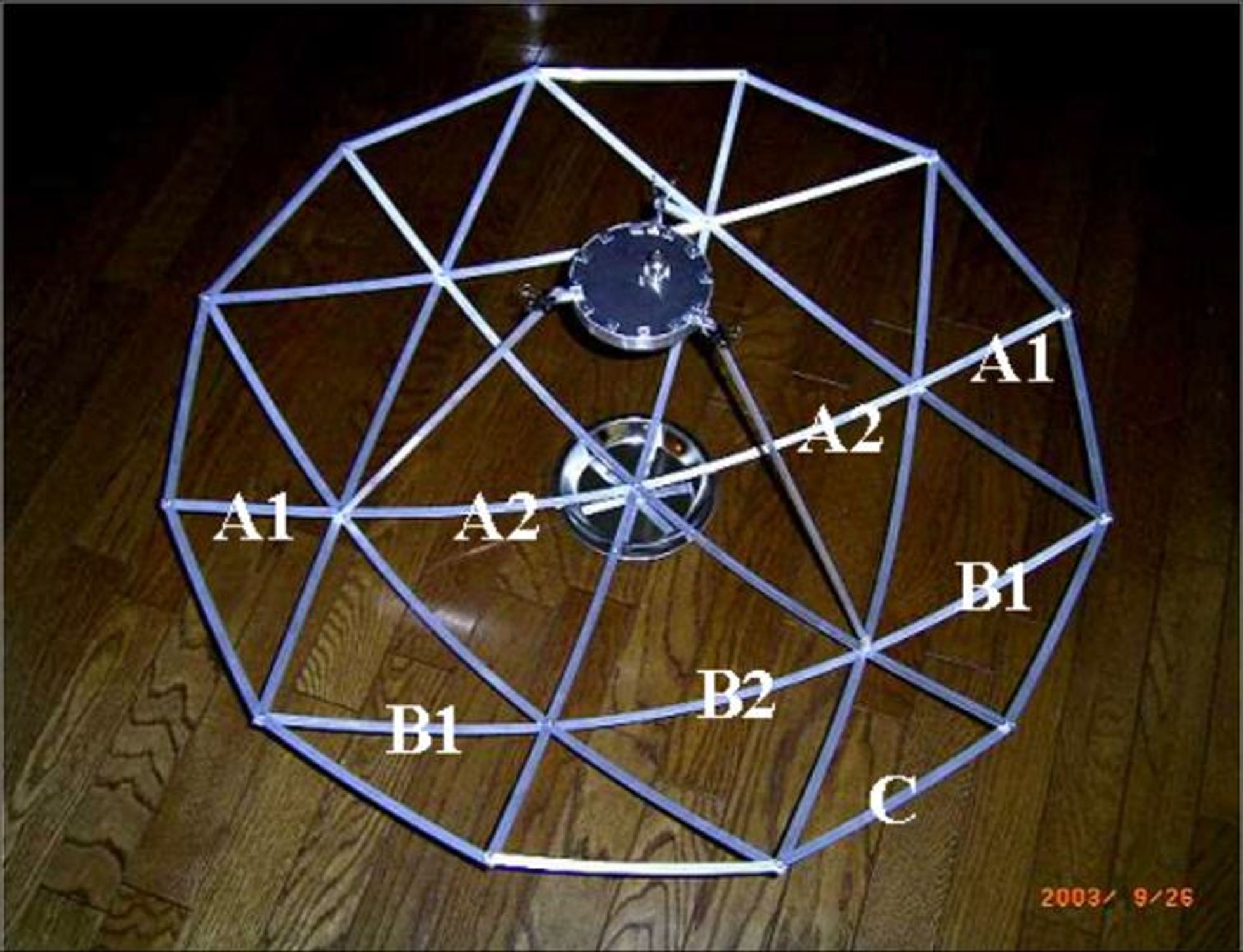
Parabolic dish layout
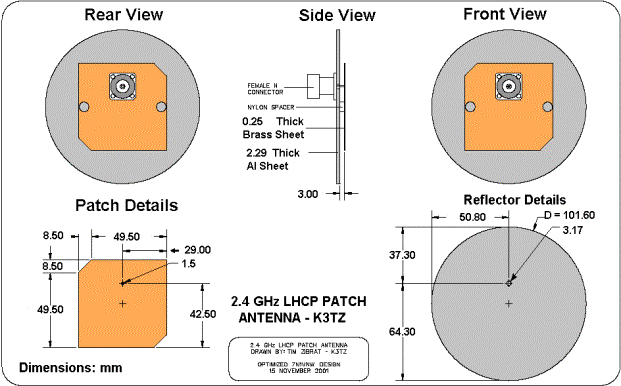
Antenna Schematic
In the video, they bought a premade parabolic dish and modified it to be able to receive, however, I thought that it would be cool to build my own satellite dish. Thus started my journey of research to find all the schematics I needed in order to build my very own satellite dish. Over a period of at least a month, I found schematics to build the parabolic dish and a calibrated antenna by a Japanese and Russian respectively. Takeyasu Schematics
Now one might be concerned that since both of these schematics are older than me, they might not work for what I'm trying to do. However, physics doesn't change and the series of satellites I’m going to listen to are from the 70’s, so that's not much of a concern.
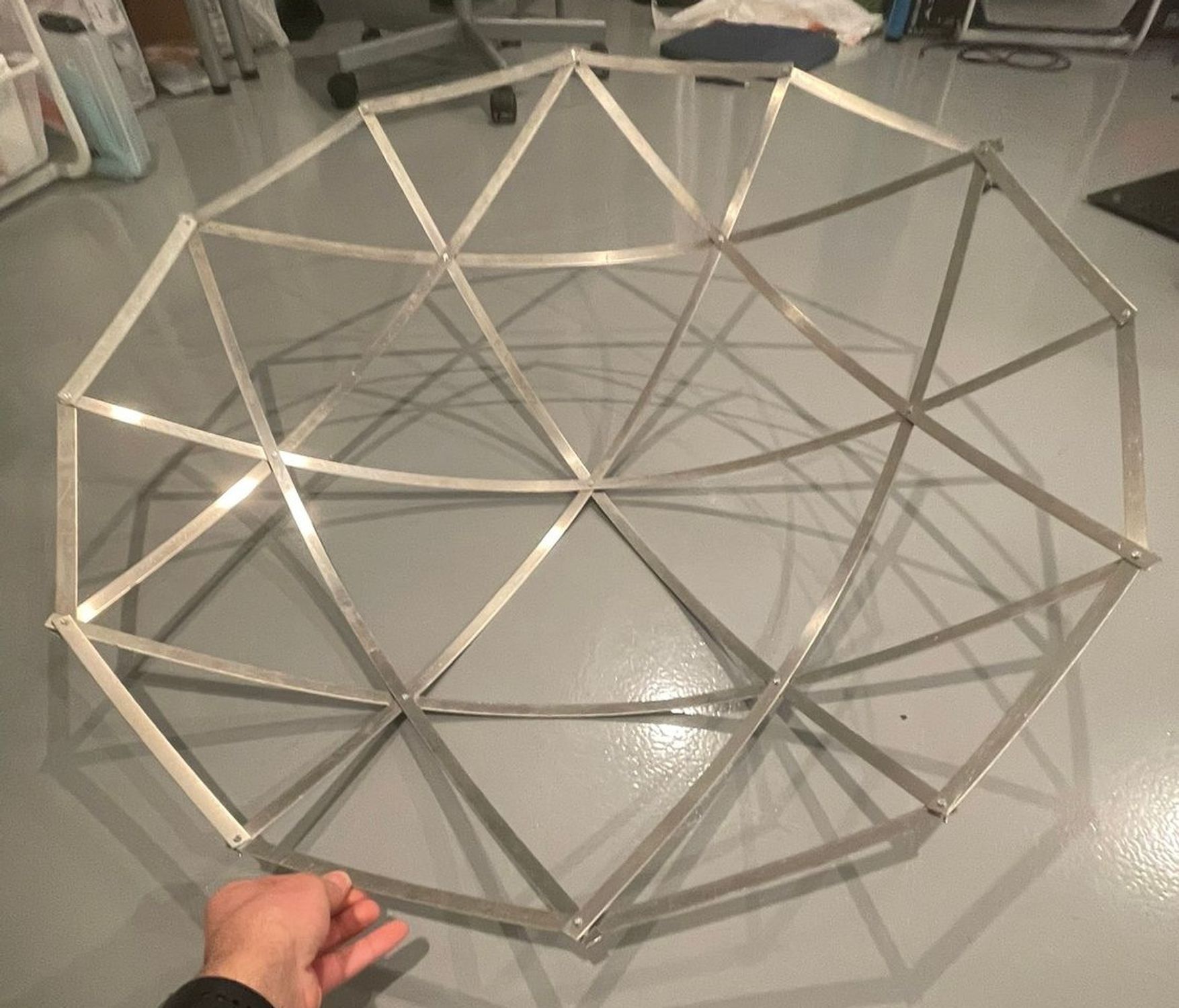
Now, with my schematics, I just have to acquire the raw materials needed to construct the parabola and the patch antenna. While my local hardware stores didn't have the aluminum bar that I needed, the internet had me covered. After acquiring the bar, I had to cut them to size with a dremel, and drill screw holes to connect the bar. Now, with all the bars connected, I had a real parabola!
Parabolic Dish Frame
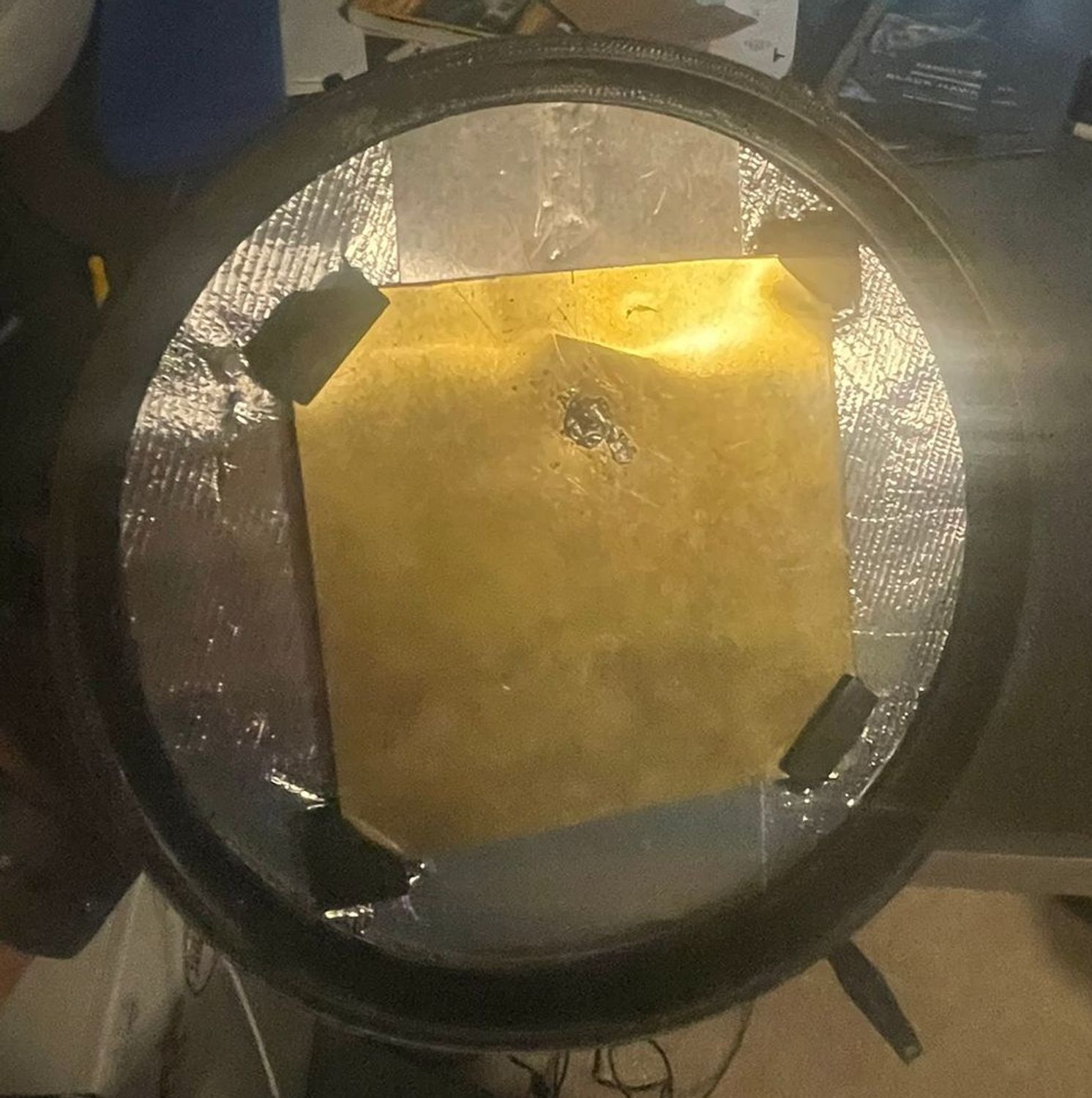
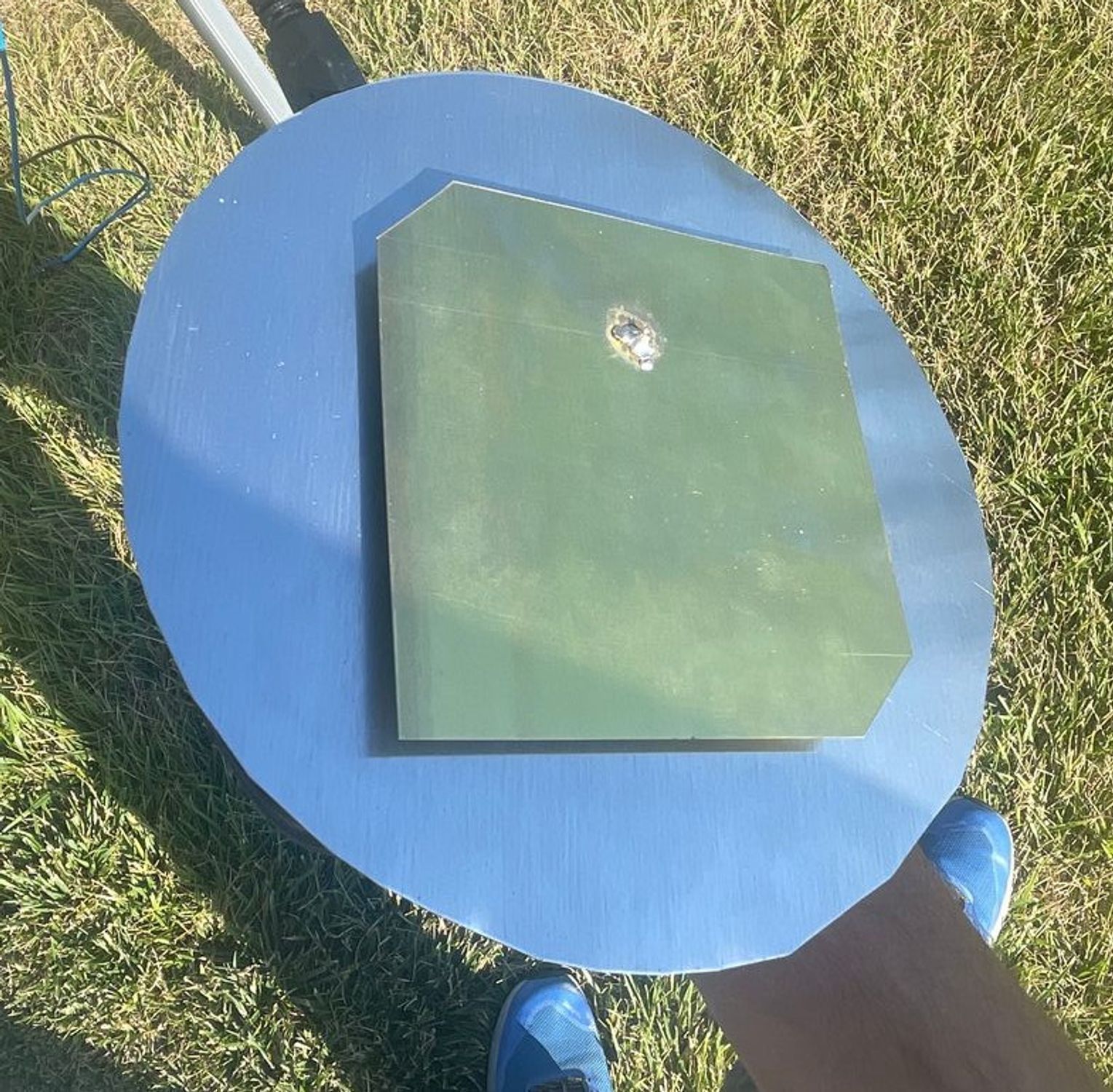
To make it actually reflect any radio signal, I had to sew on a metal mesh onto the bars to give it a backing. While it was quite mentally and physically painful to cut and sew, I eventually had a working parabolic reflector. Now I needed to build the antenna, however, being the cheap person that I am, I didn’t want to actually spend money on the proper parts for it. I started out by using foam covered in aluminum foil as the backplate, later switching to a thinner 3d printed backplate for my antenna. Instead of buying a proper SMA plate connector, I also just directly soldered a coax cable to the antenna.
Prototype anteanna #2
Unsurprisingly, this makeshift antenna did not work, and only caused more problems as time went by. Biting the bullet, I bought the proper parts and was left with a beautiful proper patch antenna.
Prototype anteanna #3, built with real parts
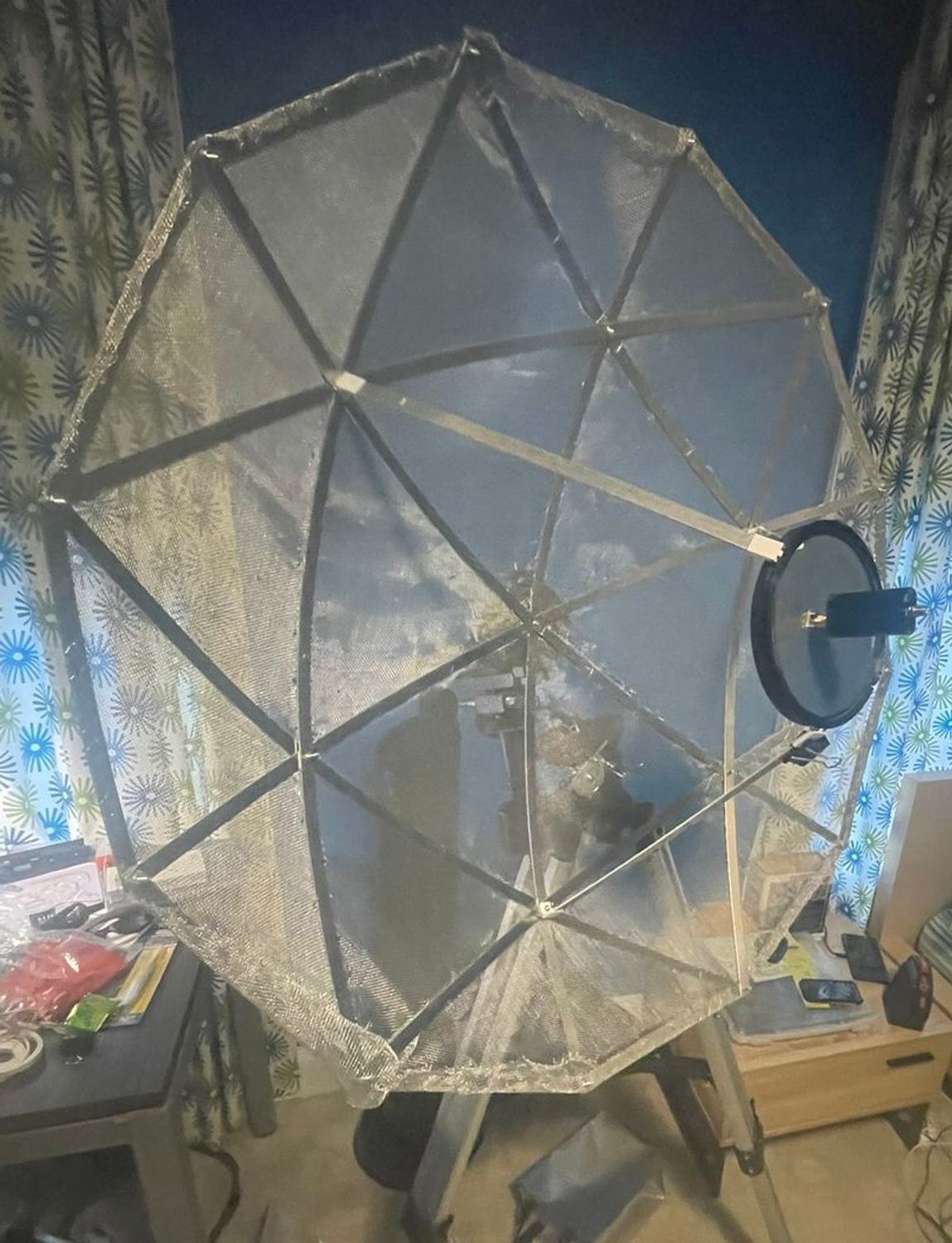
Measuring this with a spektrum analyzing software, it was right on my target 1.7GHz centerpoint. Now, with a properly built parabolic reflector and patch antenna, connecting them gave me a proper satellite dish that theoretically could receive the signal sent down by the GOES series satellites. Now while it theoretically could receive the satellites signal, it took me a while to actually successfully record the signal. It turns out that while trying to receive the signal, I had my SDR (software-defined radio) directly connected to the antenna, right in the way of the parabolic reflector. My cheapness had come back to bite me as my refusal to buy coax cable led to the noise from the USB device completely destroying the signal I was actually trying to listen to. After acquiring the correct cable, I was finally able to hear the beautiful noise of the GOES satellite sending data down to earth. Below is a GIF (for sure pronounced yif) that I compiled from an entire day's worth of pictures from the GOES-16 satellite.
Fully built satellite dish
After a long time of researching, building, and troubleshooting, I finally had a working satellite dish that I could get real time pictures of the earth directly from space.
compliation of a full day's worth of full color composite images